CRD water quality research visit – September 4th, 2024

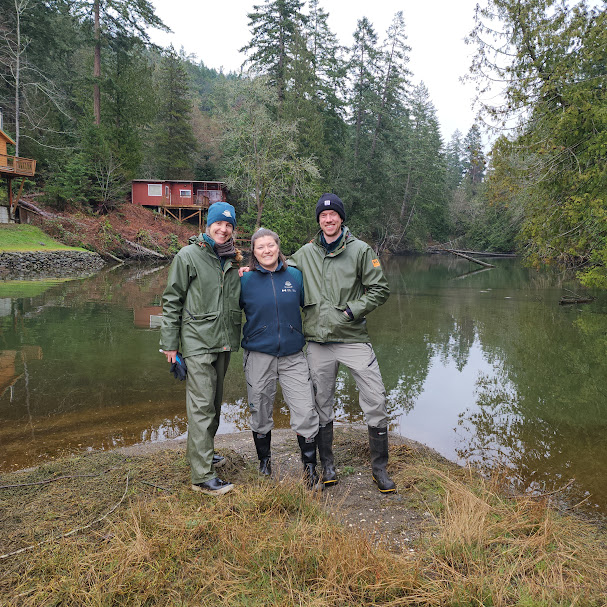
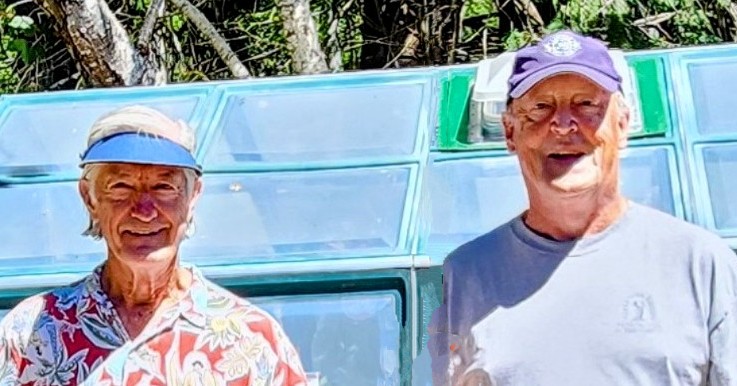
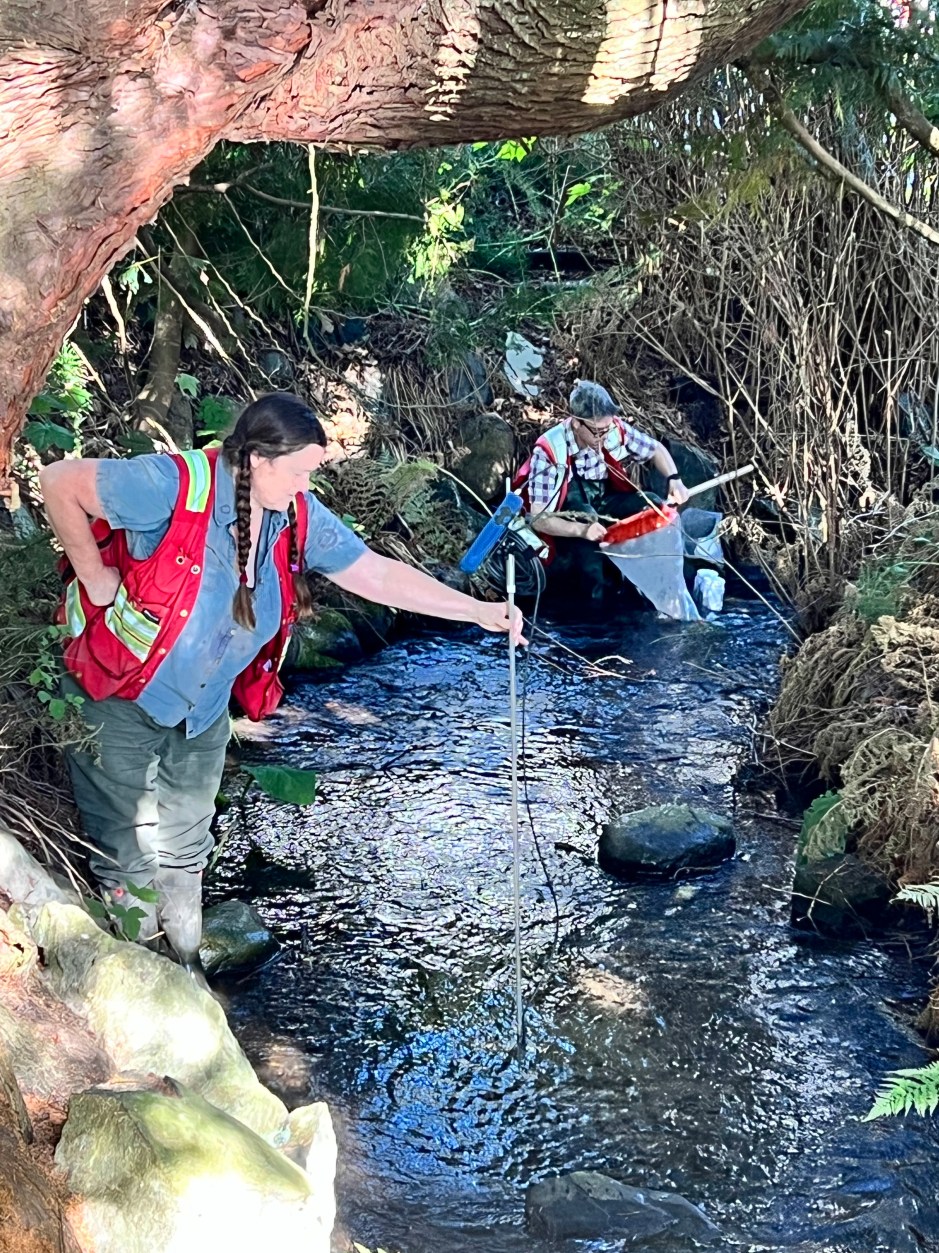
Bee Creek is monitored by both volunteers of the Esquimalt Lagoon Stewardship Initiative (ELSI) and the Capital Regional District (CRD). This week we were visited by Sara, Barri and Dean (CRD) as part of the water quality research program.

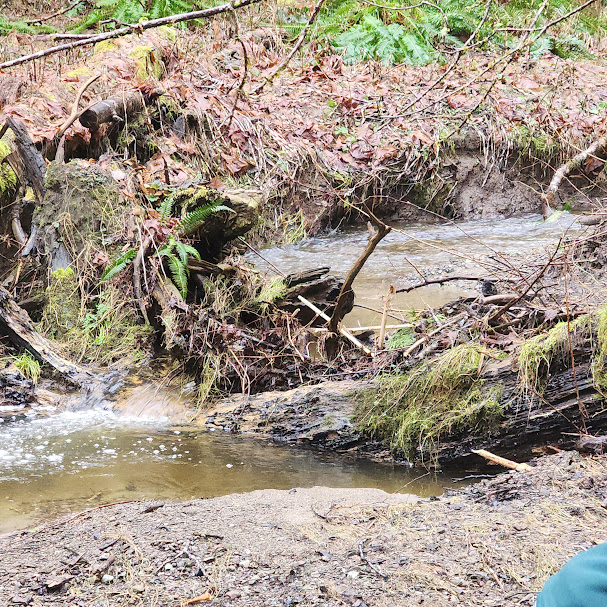
The one hour visit completed an extensive analysis of Bee Creek and we learned how water velocity, temperature, turbidity were measured. In addition, careful measurements of the creek depth and width were taken plus sampling of pebble size, sand and vegetation were taken.

This was the third visit for Sara, who previously had taken water samples to test.

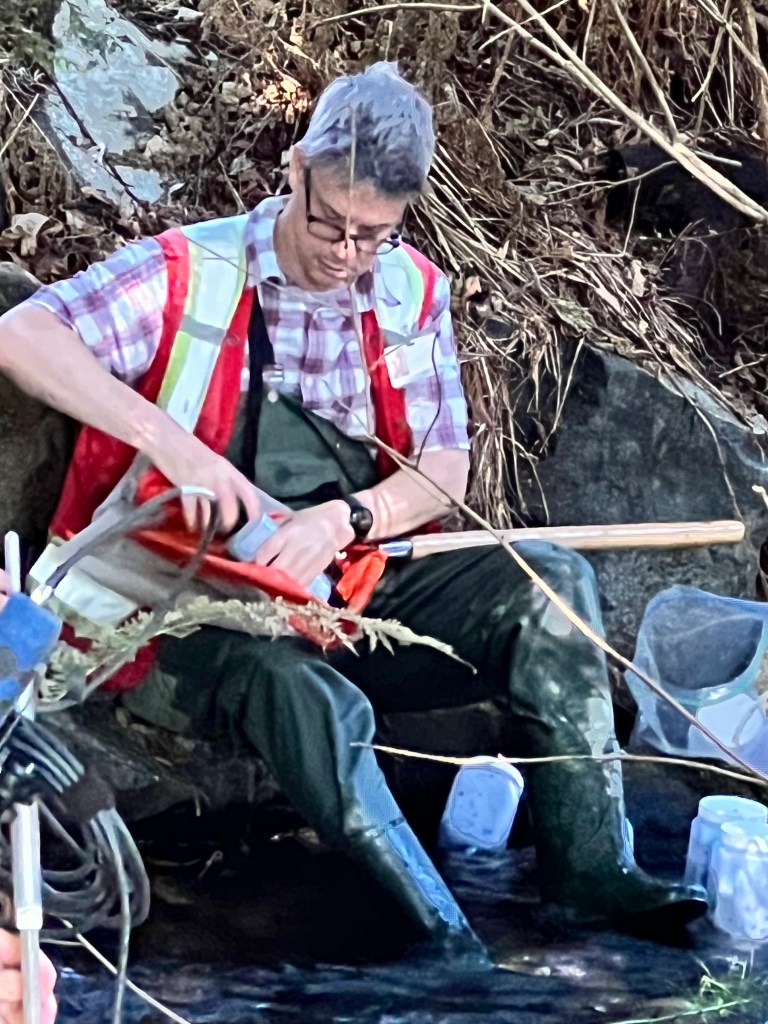
Using a sample length of the creek, which contained ripples, Dean a used kick net to collect macro invertebrates. The net was moved carefully along the bed of the creek while collecting vegetation, mud and a variety of insects such as flies, larvae and shrimp. The bottom of the net contained a collection tube from which samples were taken.
All samples were sent to CRD laboratories for examination, analysis and reporting. See the last report completed by CRD in 2008.

July 28th, 2024

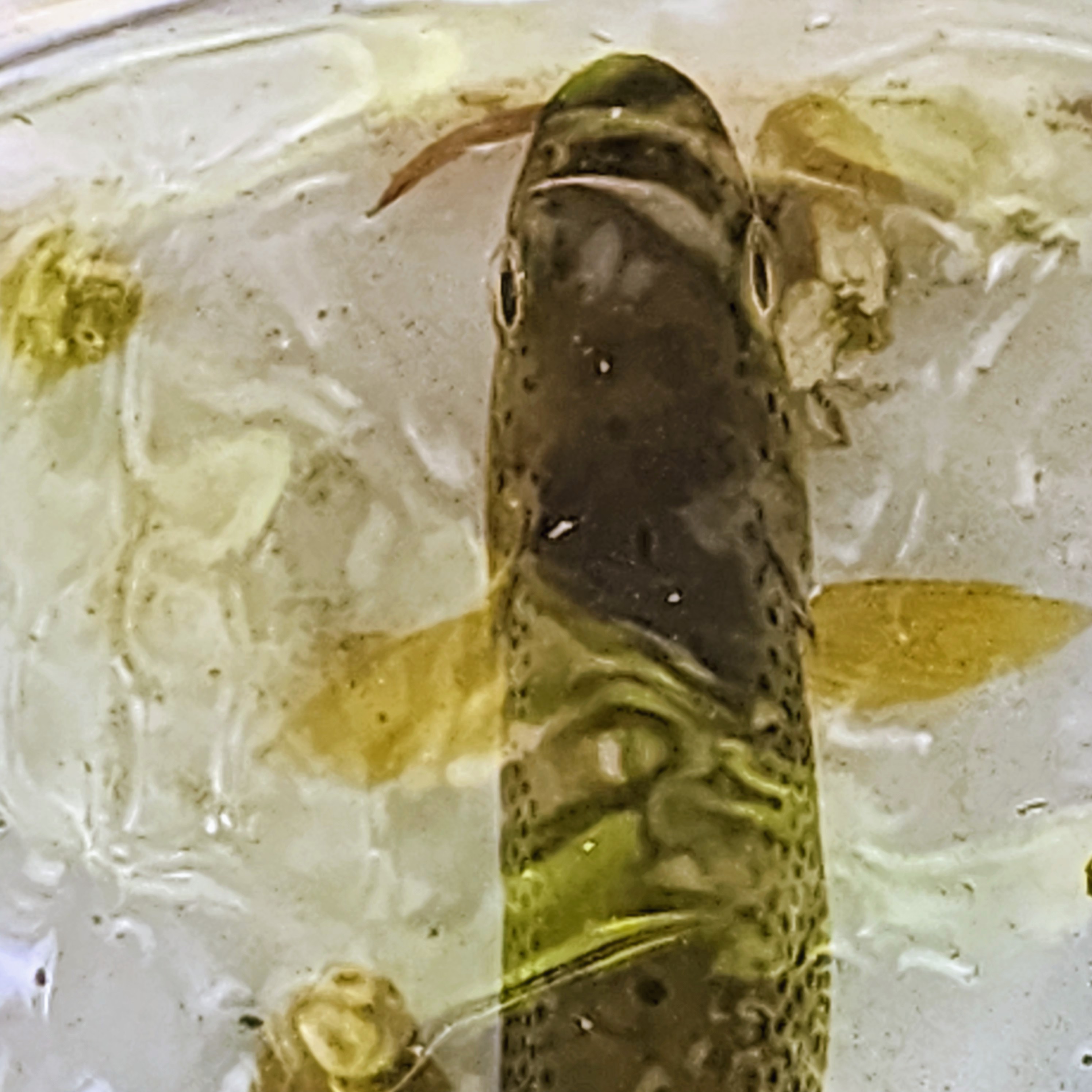
By the end of July, Bee Creek has been heavily overgrown with blackberries, horse tails and weeds making access to the monitoring sites a little challenge in some cases. The number of trout recorded continued to drop although the fish measured were lively , of good colour and appeared to be eating well.

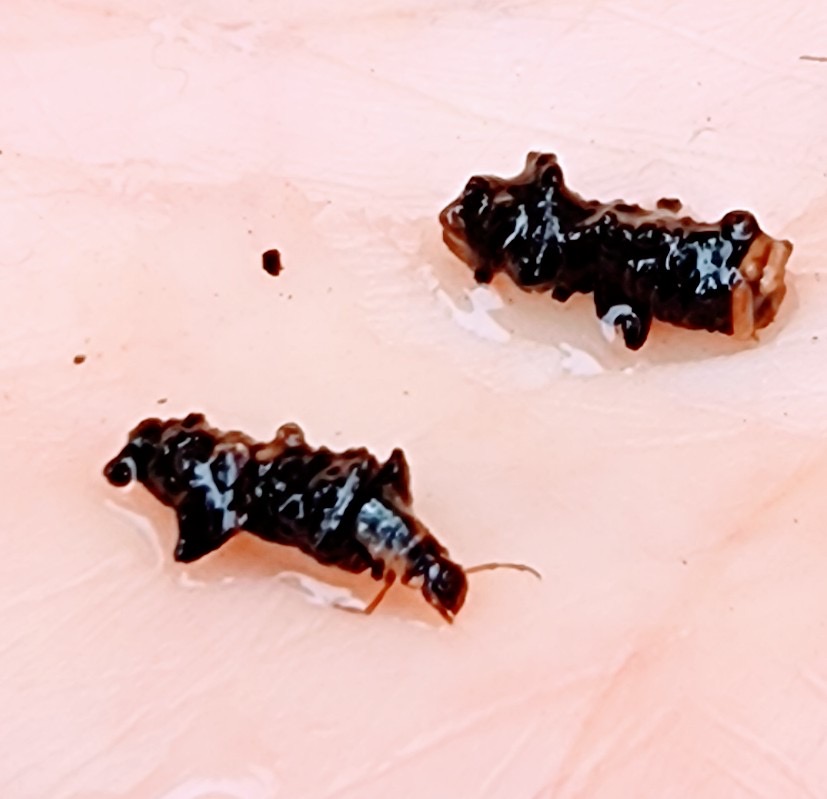
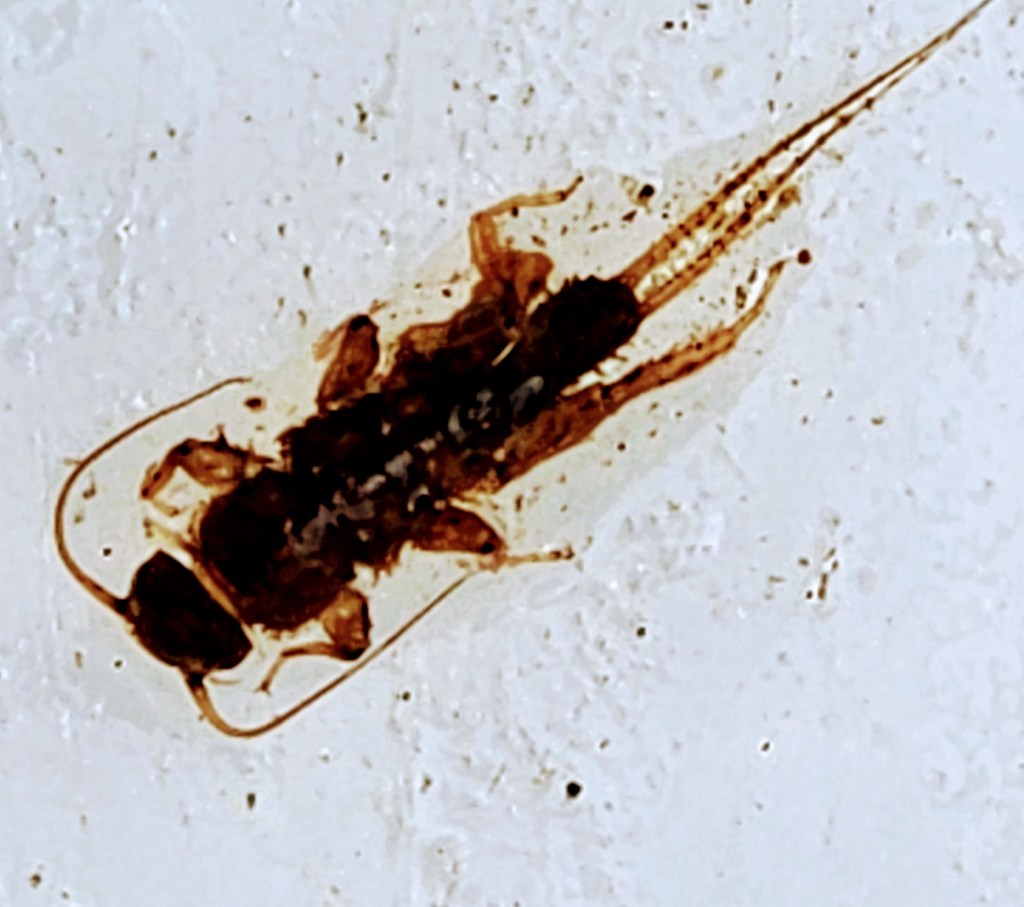
The creek holds a variety of food for the cutthroat including freshwater shrimp and caddisfly casings which are fewer indicating that these insects have moved on to the next stage. A new insect to us, (banner photo) looks like a caterpillar, but is likely to be freshwater invertebrate, yet to identified.

The pools in the creek are somewhat smaller and lower than last year with recordings concentrated towards the mouth and more upstream. Water quality testing by CRD will begin in August which may provide solutions to the question of trout numbers.

June 30th, 2024

The end of June brought us closer to the mid way of the monitoring season. Trout numbers were low with only 8 fish being recorded. The fish seemed to be pooling close to the mouth of Bee Creek and further upstream where there are deeper pools, suggesting the fish are avoiding the shallower, overgrown portions of the stream. Water temperatures were consistent throughout the creek at around 13 degrees.

Sculpins were found as usual close to the mouth of Bee Creek. Although they prey on the same insects as cutthroat there is no evidence that there is a lack of food. On the contrary, freshwater shrimp were plentiful.

Caddisflies casings were also found in the Gee traps although it is likely that they will advance to the adult stage next month emerging from the pupae.

May 26th, 2024 – Season Opener

After a long, wet spring, we opened the season of trout monitoring on Bee Creek with low count, yet similar to last year , mostly concentrated near the mouth. The waters were lower than expected considering the rain levels.

Insect activity was high. While examining the traps for insect life, it became clear that fresh water shrimp were active and plentiful.

Caddisfly larva emerging from their casing, spring 2024.

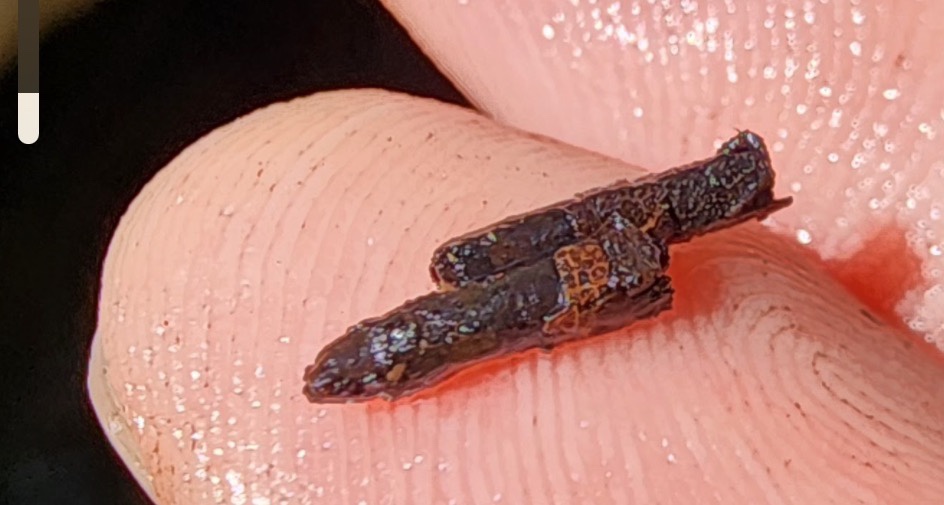
Caddisflies (Trichopteran) were equally active in the creek this month. Still in their casings, their heads emerged when picked up and photographed. The caddisfly will not emerge as a pupa until next month. Adult Caddisflies will during the summer and females will mate and lay eggs again to start the life cycle again.

Bee Creek remains a healthy habitat for Cutthroat Trout and the seasonal looks promising.

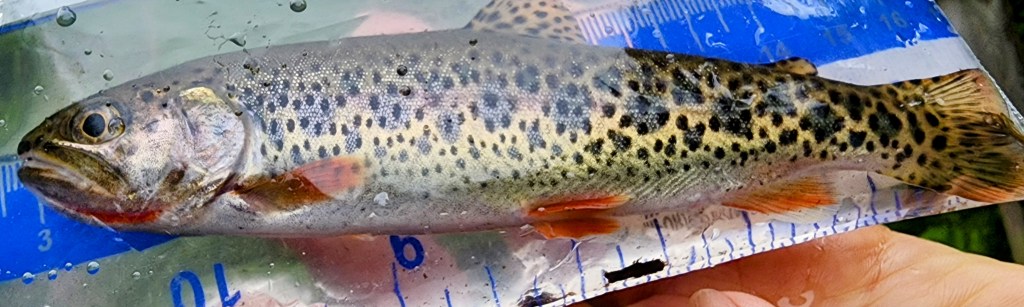
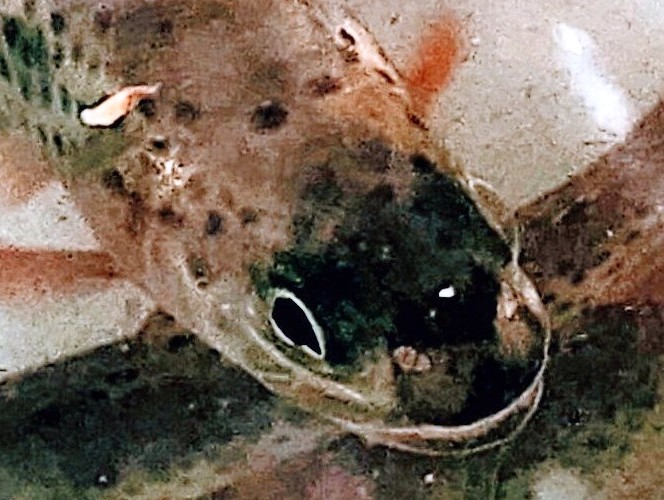
Healthy 160 mm cutthroat juvenile.

We were very happy to welcome Kelly-Anne to our monitoring team of volunteers this month. She comes with a passion for nature, wildlife and experience with fly fishing.

February, 21 2024

A visit to Lyall Creek, Saturna Island

Lyall Creek, a four kilometer long sanctuary for salmon (Coho and Chum) and trout (Searun Cutthroat) on Saturna Island, bears some similarities to Bee Creek, and a visit was planned this month, thanks to the team at Gulf Island National Park Reserve.


Shown here at the mouth of Lyall Creek, Sibylla, Hanna and Iain, began the tour with a history of the creek and an explantion of how restauration work played an important role in reviving the creek habitat on the island.


We spent the day viewing fish monitoring reaches, (groups of traps sites), updating trail cameras for signs of animal life, such as beavers and otters, taking temerature readings and examining the health of the creek.

Of special interest was the apparent wash out of a small beaver lodge which spanned the creek. At first it was thought that the beaver had abandonned its home, but on further examination, evidence of the beaver from trail cams as was found. The dam is likely to be rebuilt, perhaps at a new site, potentially causing an obstruction for the spawning fish and one trail cam was repositioned to monitor any activity.

October 31, 2023

Fall, with its cooler weather and cloudy skies came quickly to the southern tip of Vancouver Island. Bee Creek looks considerably different than during the summer as the foliage lining the banks of the waterway has begun to die off.

As the more frequent rain raises the water level, the trout are filling growing pools and 26 trout ranging in fork lengths of 30 to 195 millimeters were recorded. The largest trout of 195 looks like it was the same one recorded upstream, a month ago, on Royal Roads property.

One of the more interesting finds this month is a Stonefly nymph, seen above, It measured about an inch, indicating that it was midway through its nymph stage, before climbing ashore as an adult, and beginning the cycle again. Stoneflies are particularly prone to unclean water and its presence in the creek is an excellent sign.

Altogether 2023 was a good year on Bee Creek, with numerous of visitors, somewhat consistent trout count and a healthy creek environment.

September 29,2023

Autumn has arrived at Bee Creek with cooler temperatures, more rain and changing trout data. Numbers at each site are low, but consistent with 18 trout measured. Site 1, closest to the mouth shows a healthy number of trout ranging from three to five months old. One trout measured close to 200 millimetres fork length and located closer to the creek sources on Royal Roads property. This fork length equates to a trout of almost two years of age, which is the age Searun Cutthroat normally return to the Lagoon and coastal waters.

It was a beautiful trout, with good colour, likely well fed and very active when being measured. It was released carefully into a deep pool at site seven on Royal Roads land.

Bee Creek is home to many types of food for Cutthroat. Although fresh water shrimp continue to be active in the creek, Caddisfly larva have shed thier casings and are now, in thier adult form feeding on vegetation near the water. As a flying insect, they now add dragonflies abd birds to thier list of predators and will likely reach thier end of lifespan by next month.

August 29, 2023

Summers end brought welcome visitors from England to explore Bee Creek and Royal Roads University. Hilary and Robert along with thier family had a chance to see some of the sites currrently monitored plus a demonstration of the mechanics of a gee trap. A picnic overlooking the Esquimalt Lagoon at the mouth of Bee Creek was a peak moment for our visit.
Daryl and Rod completed the creek monitoring this month and much like July, the count was low leading to speculation that the trout are using the increased vegetation for shelter making it more difficult to lure them into the gee traps.
Despite the drought in BC this summer, leading to record forest fires and several heat waves, the creek remained healthy with cool waters and normal water levels. Trout fork lengths ranged from 50 to 120 millimeters again normal for the creek during the summer.

July 30th, 2023

July was an interesting month, with slightly warmer waters and continued heavy vegetation growth.

As for trout numbers recorded, numbers dropped to ten with four sites showing no trout after a day of trap soaking. Creek temperature rose to nearly 14 degrees and site 7 continued to attract the majority of cutthroat. Trout recorded appeared to be feeding very well, so it seems that most of the population of trout have moved to more sheltered areas.

We were joined by Rachel and Riley who were visiting from out east and we had a great time showing them how the creek is being monitored. Riley is a fly fisherman and we talked about how he ties flies to match the hatch of the season in Alberta. He was particularly interested in the caddisflies which were abundant. Looking closely at the tip of the casing revealed the head and front legs of the fly.

A caddisfly casing is made up of bits of vegetation and wood.

June 30, 2023

June brought continued healthy cutthroat populations, accompanied with heavy vegetation surrounding the creek.
Much like last year, parts of the creek for which are heavily overgrown provide shelter and make numbers of trout a little unpredictable. Although 25 trout were recorded, some sites, such as 7 in Royal Roads University property held only one trout after a day of soaking traps. The same occurred on site 5, suggesting that on these sites the trout have moved to cooler water and where more protection from plant life were available.

One strategy we have contemplated is to test new sites throughout the creek during the month, looking at pools upstream of current sites.

Variability of trout recorded could also be connected to the abundance or not of food. Freshwater shrimp and caddisflies are plentiful in the gee traps when emptied in collection buckets, especially at site 6, a relatively deep pool, where seven trout were recorded.